Since we are beginning the unit which covers epidemiology, I thought it would be a good time to bring up the current news topic of the continuing Ebola epidemic which is turning out to be the worst Ebola outbreak in history and has the potential to become pandemic. As you know by now, Ebola is a hemorrhagic virus which is most commonly seen in Africa. Once the infection sets in, there is a loss of many immune cells and endothelial cells resulting in an extremely weakened patient who is not only unable to put up a good fight, but will experience the breakdown of blood vessels leading to large amount of blood loss.
The article from Vox.com titled "Americans should panic about Ebola, but not because it threatens the United States" focuses on the idea of what is happening now with the virus to make it a more formidable threat later. There is speculation that mutations in the virus are leading to Ebola becoming endemic in West Africa so that it ..."becomes a constant threat rather than an episodic one.". The article goes on to discuss the potential ramifications of endemic Ebola for global travel, health care, business, and the human condition in general. Ebola may not be a direct threat to kill you in the U.S., but in terms of worldwide human suffering, it is worthy of great concern.
Read the entire article here: http://www.vox.com/2014/10/14/6971585/ebola-panic-africa-america
Wednesday, October 29, 2014
Friday, October 24, 2014
Excuse Me, Can I Borrow a Cup of ATP?
There is a popular belief that eukaryotic mitochondria are a result of co-evolution of primitive eukaryotes and their prokaryotic symbiotes. The hypothesis of this co-evolution stems mainly from the fact that eukaryotic mitochondria have several characteristics which resemble bacteria which no other organelle (besides chloroplasts in plants) possess. These characteristics include circular DNA, 70s ribosomes and reproduction via binary fission.
Many of the stories speculate that the relationship was a mutualistic one where both the eukaryotic cell and the prokaryote found benefit in their union, but a new study is showing evidence that the prokaryote may have been an energy parasite.
An article published at ScienceDaily.com reports on a University of Virginia study that used DNA sequencing to compare the genomes of bacterial species thought to be closely related to mitochondria. The researchers are predicting that the prokaryotic parasites actually took ATP from the host cell but after successive generations began to switch the direction of ATP transport and became beneficial to the host.
You can read the entire article here: http://www.sciencedaily.com/releases/2014/10/141016165955.htm
Many of the stories speculate that the relationship was a mutualistic one where both the eukaryotic cell and the prokaryote found benefit in their union, but a new study is showing evidence that the prokaryote may have been an energy parasite.
An article published at ScienceDaily.com reports on a University of Virginia study that used DNA sequencing to compare the genomes of bacterial species thought to be closely related to mitochondria. The researchers are predicting that the prokaryotic parasites actually took ATP from the host cell but after successive generations began to switch the direction of ATP transport and became beneficial to the host.
You can read the entire article here: http://www.sciencedaily.com/releases/2014/10/141016165955.htm
Monday, October 20, 2014
DNA Sequencing: A new Tool in the Diagnostic Toolbox
Read more: http://www.popsci.com/article/science/dna-sequencing-diagnoses-boys-mysterious-bacterial-disease
Monday, October 6, 2014
Just Creeping Along...
A report published by Max Planck Gessellschaft in Germany, titled "The Pirate in the Microbe" discusses research involved the "Twitching Fimbriae". We discussed this type of cell mobility in Module 2 using Psuedomonas aeruginosa as a model organism. The P. aeruginosa "throws"grappling hook-like fimbriae out to attach to a substrate and then moved along the substrate as the fimbriae contracted.
This article focuses on work with Neisseria gonorrhoeae and thoughts on how the direction of movement is chosen. I found it interesting that the path of movement may come down to which fimbriae contracts the strongest leading to a mostly random "decision" of where to go.
Click here to read the original article.
This article focuses on work with Neisseria gonorrhoeae and thoughts on how the direction of movement is chosen. I found it interesting that the path of movement may come down to which fimbriae contracts the strongest leading to a mostly random "decision" of where to go.
Click here to read the original article.
| Neisseria gonorrhoeae fimbriae © University of Cologne |
Monday, September 22, 2014
Slap me some skin...
In a report by NBC News, British researchers conducted a study of the transmission of microbes during handshakes, high fives, and fist bumps, and it should be no surprise that the fist bump seems to transfer the least.
So should we adopt the fist bump as more than just a greeting between friends? I can see the CEOs of Fortune 500 companies "bumping on the deal" in the future.
Click here to read the article.
Monday, September 15, 2014
Ice Ice Baby...
Ok, I apologize for the pun there, but I found this article which I thought would be a good one to read as you start to study the types microbes in detail. The article "This Is What Lives Under Antarctic Ice" by Lisa Raffensperger for Discover Magazine, reports on a study of the microbial ecosystem 2600 feet deep into the Antarctic ice. Can you believe that almost 400 species of microbes were discovered thriving there. As you read the article, I invite you to think about microbial structure and physiology and how it connects to these guys living in an environment that is inhospitable for most organisms.
Click this link to read the the article.
Monday, September 8, 2014
How Did They Know??
Did you ever wonder how researchers know so quickly that Ebola was going to be a major outbreak? It turns out that being connected to a World Wide Web has its advantages in the area of epidemiology. As with Google's Flu Trends website that has been running for several years recording and predicting flu outbreaks, computer analysis of Internet reports, have again been useful in predicting a "mystery hemorrhagic fever" a week before the spread began.
In the article, "How an algorithm detected the Ebola outbreak a week early, and what it could do next" on the TechRepublic website, author Lyndsey Gilpin discusses HealthMap, which is described as "a data mapping tool that detects and tracks diseases across the world."
Read the article to learn more about Healthmap and the Ebola Epidemic: http://www.techrepublic.com/article/how-an-algorithm-detected-the-ebola-outbreak-a-week-early-and-what-it-could-do-next/
Don't Fart Naked Around food!
Link to the article: http://blogs.discovermagazine.com/seriouslyscience/2014/08/27/farts-carry-germs-depends-wearing-pants/#.VA3RsZRdV8F
Is the current Ebola outbreak the "Big One"?
One of the major questions asked is, "Do you think this Ebola outbreak is the next 'big one'?". It is definitely worth a read and a listen as the audio transcript is included in the article.
Link to article: http://www.npr.org/blogs/goatsandsoda/2014/08/05/338059797/the-ebola-outbreak-a-dress-rehearsal-for-the-next-big-one
Wednesday, August 27, 2014
The Germs Crawl in... The Germs Crawl Out...
A must read for any beginning microbiology student is the article 9 Questions You Were Too Grossed Out To Ask About the Bacteria Living On You by Susannah Locke for www.vox.com.
The nine questions include everything from is it OK that all of these bacteria live in and on my body to what is a microbiome and how can I have mine determined. With all of the news about normal flora and how they affect our physiology, I think these questions become much more important for students seeking careers in the health sciences.
Monday, July 28, 2014
Out of the Frying Pan …
An article from Science Daily reports that as the immune system is fighting one type of infection, another type of infection can be activated. Studies at Washington University in St. Louis show that mice with a latent infection by a “virus similar to human Karposi’s sarcoma-associated herpes virus” had that infection activated when the immune system was fighting a parasitic infection of Heligmosomoides polygyrus.
It seems that the herpes virus senses when the immune system is fighting it and moves from an active to a dormant state basically hiding from immunity. when the immune system is engaged with the parasite, the virus “senses” that the immune system is occupied and will revert to the active infection.
It is not clearly known how this directly relates to human disease, but it does show evidence of how complicated the relationships between physiological events can be in human health.
Click here to read the article.
It seems that the herpes virus senses when the immune system is fighting it and moves from an active to a dormant state basically hiding from immunity. when the immune system is engaged with the parasite, the virus “senses” that the immune system is occupied and will revert to the active infection.
It is not clearly known how this directly relates to human disease, but it does show evidence of how complicated the relationships between physiological events can be in human health.
Click here to read the article.
Monday, July 21, 2014
Ewwww, That's Gross!!
In the area of treating intestinal disorders such as Clostridium difficile (C. diff for short), irritable bowel syndrome and other similar disorders, fecal transplants have been a topic of conversation for a long time. As gross as it may seem, the idea of reestablishing a balance of normal flora to the gut seems quite logical in treating disorders which stem from an imbalance of intestinal flora.
History shows documentation of fecal transplants from as early as the 4th century where Chinese doctors would have patients ingest a "yellow tea" made of water and feces after watching sick animal consume the feces of other animals. The most important aspect is "does it work?" In a report published in the American Society for Microbiology's mBioSphere journal, scientists are claiming success in that fecal transplant treatments cure around 90% of those patients with C. diff infections.
Studying the various relationships and contributions of gut flora to human physiology may yield a tremendous amount for problems which could potentially be solved with fecal transplants.
Read the full article here: http://mbioblog.asm.org/mbiosphere/2014/06/fecal-transplants-really-do-work.html.
History shows documentation of fecal transplants from as early as the 4th century where Chinese doctors would have patients ingest a "yellow tea" made of water and feces after watching sick animal consume the feces of other animals. The most important aspect is "does it work?" In a report published in the American Society for Microbiology's mBioSphere journal, scientists are claiming success in that fecal transplant treatments cure around 90% of those patients with C. diff infections.
Studying the various relationships and contributions of gut flora to human physiology may yield a tremendous amount for problems which could potentially be solved with fecal transplants.
Read the full article here: http://mbioblog.asm.org/mbiosphere/2014/06/fecal-transplants-really-do-work.html.
Monday, July 14, 2014
Watch out for ticks!
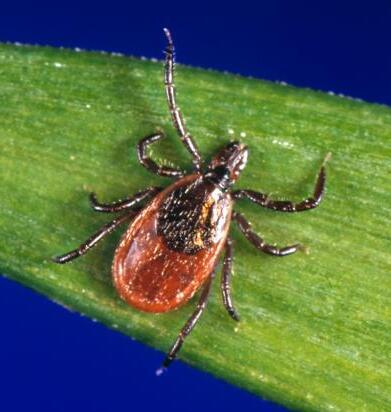
In an article published on the website of the Cary Institute of Ecosystem Studies in Millbrook, New York, getting bitten by a tick is now more dangerous than ever. Most people know that a tick check after hiking in the woods is a crucial component for reducing the risk of Lyme's disease, but it has now been confirmed that ticks can carry and transmit multiple pathogens.
Scientists discovered ticks which carry not only Borrelia sp. bacterium which causes Lyme's disease, but these ticks also were harboring Babesia sp parasites which cause babesiosis.
Saturday, July 5, 2014
Biologist create a bacterium with 6 nucleotide DNA.
Scientists at the Scripps Research Institute in La Jolla, CA have created a strain of Escherichia coli which has DNA made from A, T, G, C and two additional nucleotides they are calling X and Y. While these bacteria are not using these new genes to transcribe RNA or translate protein, they have successfully replicated the DNA containing these added nucleotides.
The idea is to expand the possibilities of synthetic proteins which could be biologically engineered in the future. Just like synthetic insulin is used today to reduce the cost to diabetics, this new genetic research could lead to other synthetic proteins which could be used in healthcare and/or manufacturing.
Read the original article here:http://www.wired.com/2014/05/synthetic-dna-cells/
The idea is to expand the possibilities of synthetic proteins which could be biologically engineered in the future. Just like synthetic insulin is used today to reduce the cost to diabetics, this new genetic research could lead to other synthetic proteins which could be used in healthcare and/or manufacturing.
Read the original article here:http://www.wired.com/2014/05/synthetic-dna-cells/
Tuesday, July 1, 2014
You are what you eat?
It turns out that diet affects the makeup of normal flora of the intestines. In an article titled "Variety in diet can hamper microbial diversity in the gut" from microbeworld.org, scientist are reported to have discovered that fish having a more diverse diet, seemed to have a less diverse community of microbes living in their gut. And, fish with a less diverse diet, had a more diverse gut microbiome. This information could be helpful as scientist continue to study the effects of our gut flora on our physiology and potentially lead to better probiotics and potentially treatments.
Click here to access the article on microbeworld.org, and here to see the original article on Phys.org.
Friday, June 20, 2014
It was a dark and stormy night …
How many movies or TV shows have you seen that start with workers in a microbiology lab becoming infected with a new microbe that leads to destruction of the human race (or a zombie apocalypse)? Well , this is no movie!
According to the New York Times, workers at the Centers for Disease Control were exposed to a lethal form of Bacillus anthracis while studying ways to better kill this bacterium that causes anthrax. Bacillus sp. have the ability to form a protective endospore which allows them to survive many attempts to kill them. These scientists had used a new chemical means of trying to kill the bacteria, but it was unsuccessful and the spores were aerosolized and possibly inhaled by the workers. None of the exposed people have shown symptoms, but are being treated with antibiotics just in case.
Again, this is not the start to a zombie apocalypse, but it does reiterate the warning about being safe while working with pathogenic microbes.
Link to article: http://www.nytimes.com/2014/06/20/health/up-to-75-cdc-scientists-may-have-been-exposed-to-anthrax.html
According to the New York Times, workers at the Centers for Disease Control were exposed to a lethal form of Bacillus anthracis while studying ways to better kill this bacterium that causes anthrax. Bacillus sp. have the ability to form a protective endospore which allows them to survive many attempts to kill them. These scientists had used a new chemical means of trying to kill the bacteria, but it was unsuccessful and the spores were aerosolized and possibly inhaled by the workers. None of the exposed people have shown symptoms, but are being treated with antibiotics just in case.
Again, this is not the start to a zombie apocalypse, but it does reiterate the warning about being safe while working with pathogenic microbes.
Link to article: http://www.nytimes.com/2014/06/20/health/up-to-75-cdc-scientists-may-have-been-exposed-to-anthrax.html
Subscribe to:
Comments (Atom)